DUX SERIES: The Evolution of Banded: Waterfowl Innovation, Legacy & What’s Next (Ep 777)
Can we do a mic check, please? Everybody, welcome back to the Ducks Unlimited Podcast. I'm your host, doctor Mike Brasher. I'm your host, Katie Burke. I'm your host, doctor Jerad Henson. And I'm your host, Matt Harrison. Welcome to the Ducks Unlimited Podcast, the only podcast about all things waterfowl. From hunting insights to science based discussions about ducks, geese, and issues affecting waterfowl and wetlands conservation in North America. The DU Podcast, sponsored by Purina Pro Plan, the official performance dog food of Ducks Unlimited. Purina Pro Plan, always advancing. Also proudly sponsored by Bird Dog Whiskey and Cocktails. Whether you're winding down with your best friend or celebrating with your favorite crew, Bird Dog brings award winning flavor to every moment. Enjoy responsibly.
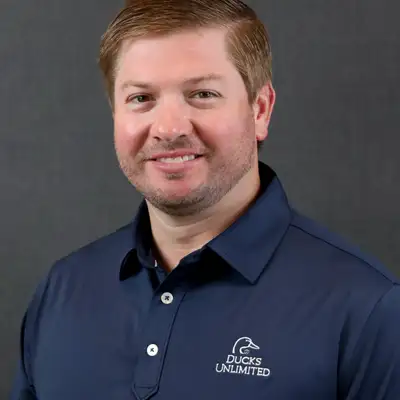
Jimbo Robinson:Welcome back to another installment of the DUX series here on the Ducks Unlimited Podcast. I'm your host, Jimbo Robinson, alongside this series cohost, mister David Schuessler. This series is highlighting our companies and individuals and organizations that are highly involved in success of our DUX Waterfowl show. Speaking of this show, this year's show is July 31 through August 2 at the Renaissance Convention Center here in Memphis, Tennessee. And speaking of Memphis, Tennessee, today, we have a special guest on the podcast, mister Art Diaz with Banded Hunting Gear.
Jimbo Robinson:He's the community manager of Banded Brands. And you may not be in Memphis today or live here, but it is the headquarters for Bandit. So we are super excited, to talk with you a little bit about, Bandit and and other stories of Avery and GHG and Avery Sporting Dog and everything that is the Bandit brands. And excited to talk about DUX again and and the success that y'all helped with last year. So let's start with this.
Jimbo Robinson:Art, how are you doing today?
Art Diaz:Man, thanks for the intro. I'm doing great today, man. Enjoying a beautiful day here in South Dakota, and, yeah, thank you guys for having me. Is it raining? Not today, man.
Art Diaz:We have had the windiest spring and not nearly enough rain. It is unbelievably dry up here. Probably about halfway through the state. Like, if you're looking at it from east to west, if you drew a line down right in the middle from east to west, like the the south half where I live, very, very dry. The northern half, even last year, I mean, they got a bunch of rain.
Art Diaz:There's flooded, you know, flooded cornfields, flooded soybeans, all that stuff everywhere. And yeah. But we're we're warm today and a five mile an hour breeze, which feels great, so we'll take it.
David Schuessler:I would think, Jimbo, today, there are little baby ducks being made in South Dakota.
Jimbo Robinson:I would hope so. I've been seeing them. I would ask Art I would ask Art that question, but
David Schuessler:that may just be weird.
Art Diaz:You know? I've I like to take a lot of photos in the spring too, and so I've I've seen the courtships. I've seen some of the mating stuff. I've seen some little hatches running around already. Little little geese, yellow and turning gray, and there's a bunch of them out there, which is good to see.
Jimbo Robinson:That is good to see. The courtship in the Prairies, wherever you are up there, that that courtship is fun to watch, especially when you get five Drakes chasing one hen. That's always fun to watch. We do get to see some of that down here.
David Schuessler:What's the Jimbo, what's the best courtship flight? I think it's the pintail when they start cutting.
Jimbo Robinson:Yeah. When I was at Ducks Unlimited in 2011, we watched Blue Wing Teal, and they were so fast. It was awesome. I remember that like it was yesterday. I mean, like, just the way they they moved on that pond as a group, it reminded me of, like, the blue angels, how they moved through the sky.
Jimbo Robinson:Like, it it was like they had it planned. Yeah. Like shorebirds. Right?
David Schuessler:It was a
Jimbo Robinson:Really cool. Well, Art, we're gonna jump into a fun game we call the flock shot where we're gonna spray you with questions, and and you give us some quick answers. You think you're ready for it?
Art Diaz:Man, I think so. I'm looking forward to it.
Jimbo Robinson:Alright, Chris. Cue the button. Let's go.
David Schuessler:The flock shot.
Jimbo Robinson:Here we go. Coffee drinker or not?
Art Diaz:Man, usually in the off season, yes, but ironically during hunting season, I'm not. Wow. I know it. I know it.
David Schuessler:Do you, like, switch to monster or something?
Art Diaz:I don't, man. I have this really weird thing. I love ice water, like, year round, and it's, I mean, it's freezing cold up here in the Dakotas. So it's always, you know, when I'm at camp and someone's like, do you have ice water in that container? And they're like, yeah.
Art Diaz:I'm like, dude, it's negative 13 out. What are you doing? Like, I just love ice water. And I've I've Wow. Resorted to not including any more variables in my mornings, so making coffee is one of them.
Art Diaz:So I just kinda do the same thing every day. Just grab my headlamp, grab a gun, get to the truck, and hit the road. And stopping to get coffee, make coffee, buy coffee, it's just something that I've opted out on.
Jimbo Robinson:Man, like, that's that's odd. I'm almost stunned. Like, that's the opposite of what most
David Schuessler:don't think anybody's ever answered it that way.
Jimbo Robinson:No. I I drink coffee because it's convenient during duck season, and I don't in the off season, but, hey, teach his own. Alright. Favorite color of Gatorade?
Art Diaz:Easy. Purple every day of the week.
Jimbo Robinson:Do you know the flavor?
Art Diaz:Man, I guess I didn't know that it wasn't purple. Grape, maybe? Riptide rush. Oh,
Jimbo Robinson:dang. I had to learn these. I know. I've had to learn these. If I had to learn these, most people say yellow and orange, and orange is orange, but there's other fun.
Jimbo Robinson:So that's a good one.
David Schuessler:Alright. So you can choose one to shoot the rest of your life. For all shotgunning needs, are you choosing an over under or a semi auto?
Art Diaz:Semi auto.
David Schuessler:That's great. Okay. Semi auto. Okay.
Art Diaz:Yes, sir.
Jimbo Robinson:Since you don't get coffee when you stop at the gas station, what is your favorite gas station snack?
Art Diaz:Alright. Recently, I've been on these little little pie kicks. I have found some, like, apple pies that are real good, but this one company, I forget what it's called. I have a photo in my phone to remember, but they've got, like, coconut cream and a bunch of really unique flavors, and they're really delicious. So I would say a little pie.
David Schuessler:Alright. Banded has so many different lines of fantastic clothing. What's your favorite?
Art Diaz:My favorite this last year, I had put a lot of time on this new a new jacket. Sorry. It just it just totally blanked my mind. It's called the Sub Zero jacket, and it's this real lightweight jacket. And I I I hunted with it almost every day this year and really love that jacket.
David Schuessler:Well, it must be warm if you're drinking ice water.
Jimbo Robinson:That's a that's a good fit. Yes.
Art Diaz:Yes. Absolutely. Alright. If you
Jimbo Robinson:had if you if you had to live the rest of your life with only one of these, what would it be? Because the other two would be extinct. TV, music, or books? Oh, easy.
Art Diaz:Music. Interesting. Watch about man, I I watch very, very little TV. I have kids, so now that's been a little bit more normal during, you know, our evenings together and things like that. But as far as purely for enjoyment, I watch, I would say, basically zero television.
Art Diaz:And books, I'm I'm really not a super active reader. It is something that I've made mental note of to try to be better at, but not something I've fully committed to being better at just yet.
David Schuessler:Alright. Last one. Nonclothing. What's your favorite piece of banded gear?
Art Diaz:Oh, that's a good one. Do waiters count? Sure. Yeah. Waiters.
Art Diaz:Yeah. They've been incredibly comfortable, real simple, real sleek. Our new waiters have done really well for us. I've been really happy with them.
David Schuessler:Jimbo, mine is the hard shell backpack.
Jimbo Robinson:Does not surprise me one bit. I that that that is mine, hands down. No questions asked. Yep. Best designed backpack, I believe, ever in the industry.
David Schuessler:Because it gives me a little table for my coffee.
Jimbo Robinson:Or ice water. Yes. And yeah. Or shells or Yeah. Anything else.
Jimbo Robinson:Yeah. For, you know, probably not for you, but for for a lot of guys that stand in a tree line or stand on trees, the convenience of how that backpack works and how it opens up to the bottom pocket that fits way more than you think and where it is on the bottom because it's probably the heaviest thing you're gonna put in the backpack. It just it works.
David Schuessler:That's right. It works. Sure does.
Art Diaz:Many miles on that backpack.
Jimbo Robinson:Yes. You do?
Art Diaz:Yeah. Absolutely. Yeah. I've and let me think. I've man, pretty much since the before I worked for the company, that's the bag I used.
Art Diaz:I I bring a lot of camera stuff in the field, and I try as as much as I can to keep everything as simple as I can, and that backpack for sure has been the best solution that I have found myself for sure.
Jimbo Robinson:That is awesome. Well, Art, you know, we we've kinda talked a little bit about you, but why don't you introduce yourself to the listeners a little bit about who Art Diaz is and and not only what you do at Bandit, you know, how long you've been there and where you grew up, and just give the give them a a 30,000 foot foot view of of who you are and and a little bit about Bandit and and your connection there.
Art Diaz:Sure. So I was born in California. I lived there until I was about 10 years old, and we we ended up moving out to South Dakota. My dad grew up hunting. Every photo I have of my grandfather is in black and white with with game in front of him.
Art Diaz:He was an avid outdoorsman as well. And as soon as we got to South Dakota, everyone hunts. Every kid I went to school with was was very into it. So quickly hopped back in, and I remember from the first time we pheasant hunted, I I really enjoyed it, really took on to it, but my life really, really drastically changed after shooting my first duck. After after that, I was just head over heels with it, hunted as much as I possibly could, spent a lot of time during my high school years just hunting every weekend.
Art Diaz:After hunt or excuse me. After high school, I I actually started traveling full time as a musician. So I was touring and bouncing around the country, and every opportunity when I was home, I would immediately head out to the marsh and and just spend more and more time hunting, which actually led me into my first job in the outdoor industry. I worked for a company called Alclair Outdoors. They they actually specialize in making in ear monitors for musicians, which is the the little earpiece that, you know, most of your favorite artists wear on stage to be able to communicate with the band and hear themselves.
Art Diaz:And then the reason they brought me on was to launch the outdoor line of their products, which was basically a custom fit earplug that had electronics in it that was noise canceling and all those things, which was, yeah, my first job in the outdoor industry. That's the first time I went to Ducks and did all these shows was was with them. And then in November, I was offered a position at Banded to come on full time with them as their community guy and and jumped over and did that. And my relationship with Bandit started years prior to that. I had been on their creative team, taking a lot of photos for them, doing doing a lot of marketing and media related things, and then this job was kinda just the next step in that evolution.
David Schuessler:What instrument, Art? I'm a guitar player. Well, I probably don't need to tell you that oftentimes music and duck hunting do not mix.
Art Diaz:It's it was much less when I was younger. That's for sure. I I remember, like, distinctly jokingly telling people, I've got my skinny jean tattoo group of friends in my phone, and then everybody else drives trucks and hunts and does all these other things, and there wasn't a lot of crossover. I think now more than ever, like, those two communities in my life are very, very overlapped. Like, every every artist that I worked with on the audio Auclair side, I mean, the majority of them were, like, huge in the getting into the outdoors, and that's the way they can recharge and kinda retreat and stuff.
Art Diaz:And a lot of the guys that I hunt with are very involved with other creative things, which a lot of times is music or at the very least have a huge appreciation towards it. So there's a lot of similarities in kind of a weird way, you know, even traveling, and you meet someone who's extremely passionate about the same thing you are, and immediately, you you hit it off with them. And it it's it's a really cool a really cool mix of the two worlds that I've I've come to know for sure.
David Schuessler:There are similarities. You know, if if you're running mic cords on a stage, it's very similar to putting out decoys and where you set your monitors and everything else.
Art Diaz:Yeah. That's
David Schuessler:right. And I I do know what you're you're talking about. I was in that world prior to going to work for Ducks Unlimited and had the music friends who just could not understand why at 03:00 in the morning, you weren't going to sleep and were about to go and drive two hours to stay up and put on rubber pants and go walk around in the water. But there does seem to be and not just the country music. Obviously, there's always been a tie between country music and and the outdoors and hunting and fishing, but I I I don't know if it was a COVID thing.
David Schuessler:I don't know if it's just a cool factor or what it might be, but we're starting to see more and more musicians, actors, you know, that whole entertainment world starting to gravitate. And I'm gonna say gravitate back. Mhmm. Because if if you look back into the early days of Hollywood, so many movie stars were avid duck hunters. We have a lot of them on our old film here in our archives.
David Schuessler:And, you know, something happened that just there was this, you know, this pull away, but we're we're starting to see this pull back, and you hear these stories of, you know, I I saw so and so, and and they were at a lodge somewhere or something like that. So I don't know I don't I don't know what that does for the industry. I don't know what it does for conservation. Obviously, we could get more of those people involved. It would certainly help on the conservation side, but but but as a hunter, it it is validating when you see somebody who is in the public eye like that proudly say that they, yes, I do hunt Mhmm.
David Schuessler:Or I do fish, and, you know, I I enjoy preparing the game that I hunt. I I think it's good for all of us.
Art Diaz:Absolutely. Yeah. I think I think you're right. I think maybe the COVID thing I I don't know, but I I think I I would say that since then, at least in my perspective and my experience, I think a lot of people have we had enough time to really sit back and reflect, even just the way that people talk and see things. I don't know.
Art Diaz:It just seemed like all of a sudden, we stopped taking sunsets for granted, and it was like, you know what? I really ought to slow down and appreciate that. Like, that's pretty special to see one over the lake this weekend or or whatever the case may be. And I think naturally, a lot of those things in the outdoors really point to that same kind of thing where it just gives us the opportunity to slow down, to take it all in. And, I mean, you guys know just as well as anybody, man, you see a turkey come through the woods like that or a mallard just cup up and give it up or whatever it may be, that's a that's an incredibly special deep, like, in your bones thing that happens and causes this, like, wow, just pure awe.
Art Diaz:I I don't know, man. I I wake up every day to hopefully catch a couple glimpses of those things, and I really think once you all went back to that train of thought or at least made a little window, a little place for that in their lives, I think a lot of people really took on to the outdoors and going back to fishing and going back to hunting and things like that.
David Schuessler:We our national convention, Jimbo, what was it, four years ago, we had Garth Brooks and Huey Lewis Mhmm. As guest speakers. And, you know, to hear Garth Brooks talk about the art outdoors, I mean, again, the country music thing was, you know, the it's easy to make that connection. But to to listen to Huey Lewis sit on a stage and talk about how invaluable fishing has been in his life, both growing up and then, you know, once the music ended. It was neat for me.
David Schuessler:I'm a little older than you and Jimbo, but good to see somebody like Huey Lewis who was just hit after hit after hit after hit with his band back in the the eighties and I guess early nineties.
Jimbo Robinson:Pretty neat. Yep. Yes. And and something you said, Art, that that hit home to me in two different in two different angles because you said, you know, sit back, reflect, and not take sunsets for granted. That means a ton to me.
Jimbo Robinson:Now I just turned 40 last July, and I'm dating 40 back to last July. I'm not saying that how old I turned in two months because I'm feeling older, but it it does. It it that is very powerful to not take anything for granted. But for what's scary is that the generation that I say grew up or critical times of their life were around the COVID time, talking to people is a lot different, and spending time, I don't know that they see that of that taking for granted, and it's it's our job to instill that back in them, and I think that these watching these two lifestyles, as I call it, the music industry and and DU and conservation coming together is one way that we can instill through music or through other channels, lifestyle esque things that happen, we can instill that back in a generation that, you know, around COVID for two years for some, three years for others, they lost that opportunity to spend time and hang out. So it's a different it's it's different, and it's interesting to how many people I feel like every time I turn around or or meet somebody or talk to somebody, it seems like the music industry as a whole and the outdoors lifestyles are coming together and have been for a while, but I think now it's being put into the forefront of the public and it's really awesome to watch.
Art Diaz:Yeah. Absolutely, man. I think it's it's it's like anything, you know, songs like, I've been, you know, in bands or playing for different artists or gigs or whatever it may be where you show up and you're like, man, I can't believe that I'm here in this part of the world, and they and they know these songs and it means something to them, and you connect with that. And I think that that same thing is there in the outdoors, and I think that that's that's the part that draws it to us, that there's something just so pure in that emotion, in that expression, that it's it's hard to to duplicate it. And I think especially now in a day where, you know, you it doesn't take long till you open up your phone and you're just bombarded with all these things, a lot of them negative, a lot of them AI, a lot of them just not the way that I don't think that we were wired to live.
Art Diaz:I think you you go back to those pure things, the things that make you happy, the things that just rattle your bones and do the thing, music, hunting, all that type of stuff. I think that that's where that connection is just so strong nowadays.
VO:Stay tuned to the Ducks Unlimited Podcast, sponsored by Purina Pro Plan and Bird Dog Whiskey after these messages.
David Schuessler:Along those same lines, as somebody who's in the industry, if you take a look at gear Mhmm. And what's available to the general public, I don't know if you carve out the waterfowl hunting part of it, I don't know if we've ever had as many manufacturers in the industry as we have right now, which is a good thing. Right? That's a good thing. But Art, I wanted to pick your brain on what you believe makes Bandit stand out from, you know, from everybody else.
David Schuessler:And and obviously, there's a very solid foundation when when Bandit purchased Avery, another Memphis based company or they were back then. In fact, that's how Bandit got here. But it it obviously, Avery was on the forefront with bags and and high feathered detail on the the decoys and all of that. But today, for somebody who works for Bandit, elevator speech, you meet somebody, you meet a duck hunter, what are you telling them about Banded to make them go online and take a look or find a retailer to go and and purchase your products?
Art Diaz:Yeah. That that's a great question. I I think you brought a lot of good points. You know, back looking back, you do see a lot of those really big innovative things, whether it was the breathable weight or the high detail stuff in the Avery, all the blind bags, all that stuff. I think not right now, a big focus is just being honest, making an honest product at a at a price that makes sense, that's just reliable, and it it offers a solution to people.
Art Diaz:I think with, like, kinda what you said, there is so many companies, and I don't mean this in in any kind of, you know, way, but there was just a lot of copying and pasting. I think it was easy to see, like, oh, you can take a tumbler that's, you know, double sealed, whatever, and just slap a logo on it and sell it. As long as you make it in cool colors, you can sell something like that. And I think right now, internally at Mandarin, a lot of the conversations that we're having at the desk and products that we're testing and really figuring out is, yeah, but at the forefront, what problem does this solve for hunters? What problem does it solve for somebody in the woods in Arkansas?
Art Diaz:What problem does it solve for somebody in a slough in in South Dakota and everywhere in between? How does this make somebody's day hunting better and not have to have a workaround, not have to have, you know, a weird roundabout way to make this solution the best that it can. So we're really focusing on on coming up with some really cool stuff that's gonna solve some problems for some folks for sure.
David Schuessler:Well, I will tell you that's a that's a legacy inside of the organization because knowing personally some of the original founders of Avery, who all had day jobs, their first products, they were a group of waterfowl hunters who were friends here in Memphis, and they started creating products that just were not out on the market and and decided that they wanted to to start a company, and here we go. We've got you know, it was ankle gaiters that were neoprene and neoprene gun sleeves. And I I'm thinking of all these the boat blind.
Jimbo Robinson:Oh, the boat accessories.
David Schuessler:And and the boat blind was the first one. I mean, I I think they were making blinds in in a garage, and and one day just said, hey. Like, if we're gonna make a go with this, right now is the time to do it. But I remember when having an Avery boat blind was man, you were it. You were it.
David Schuessler:You were it. But the the decoys, the green head gears with the green head gear decoys, which came on a little bit later with Avery, really to me is what at that time set them apart because there wasn't a decoy that looked like that. Is it from a from a a product perspective, do y'all still consider that one of your your keystone products? Like, tell me what's going on with Greenhead Gear today because it is such an iconic decoy that has been on the market for for decades now.
Art Diaz:Yeah. Yeah. That's spot on. I remember, yeah, my the first set of Hot Buy Avery Mallards that I bought in high school, I have them to this day, you know, and and I think in hindsight too, kind of what you said, if you would have told high school art that someday I'd be working, you know, for Avery, Greenhead Gear, Bandit, I would have never believed it. That was at the top of their game.
Art Diaz:That was when I mean, just to see an Avery Pro Staff hoodie with a with that written on their sleeve, that meant that that guy knew a lot about waterfowl hunting and was the real deal and and all those things. And it's fun to look back on that, but right now, yeah, we sell an absolute boatload of those decoys to to, you know, all over to all of our retail partners to just through our our physical store and and online and things like that. We've changed up a little bit of the motion system, some paint advancements and things like that, and and we're still working on it, you know, every day. But we've introduced a lot of the electronic decoys in our line. So, yeah, there's a lot of really cool and exciting things happening over over in Greenhead Gearland for sure.
David Schuessler:Now, Art, do you know the the history of the first Greenhead Gear decoy in Ducks Unlimited?
Art Diaz:I don't, to be honest with you.
David Schuessler:It's a great story. So one of the owners of Avery is overseas doing some you know, checking in on products and quality control checks and all of that, and he's in a cab, and he sees somebody come by with pink flamingos, like people put in their yards. And he has this idea and and tells the interpreter to tell the cab driver, follow that follow that person. We have to find out where they're going. And so they get to the factory where the pink flamingos are made, and the interpreter, you know, they have a conversation.
David Schuessler:And long story short, they need a decoy to make a mold out of to see if it would even work. And so a phone call comes to DU headquarters, which is in Memphis, and, you know, everybody knew each other from both organizations and says, I need a decoy. Well, what do need? A Mallard decoy? Widget decoy?
David Schuessler:You need a keel? Is it a full body? No. Anything. Go pull a decoy off of somebody's desk.
David Schuessler:So the person who answered the phone, whose name is Tad Turner, he's now retired from DU, walks and finds a decorative decoy. I think it was a Randy Toll. It was one of our decoys of the year. And thank goodness, FedEx being headquartered in Memphis, he was able to drive it to the airport, get it to the FedEx desk at Memphis International, put it on a plane, and have it land the next day, and that was the start of Greenhead Gear. They took that decoy, made them old, realized that it would work, and the rest is history.
Art Diaz:Man, that's incredible. I'd never heard that story.
David Schuessler:Yeah. So now now you know the story about Greenhead Gear and Ducks Unlimited.
Jimbo Robinson:Well, they figured out it worked, but ran Randy Toll's decoy was not the original. No.
David Schuessler:It was no. It was just We'll
Jimbo Robinson:get an email saying No. Randy Toll didn't make decoys
David Schuessler:for Greenhead Gear. Think it was Dick Rhodes. I think Dick Rhodes carved the first one.
Jimbo Robinson:He did?
David Schuessler:Yeah. So there. Now we've got it right.
Jimbo Robinson:Yep.
David Schuessler:But but just to see if it would go through the machine, they just grabbed one of our decorative decoys of the year off of a
Jimbo Robinson:desk. So Nah. Usually Hot buys when you said hot buys earlier, Art, it struck a chord in me because when I started at Ducks Unlimited in 2008, there was a a program called a waterfowl hunters party, and the the basis of this party was they would give you they had worked it out between between Avery and Ducks Unlimited to where they would give you a package. It was a set package, and you would you would raffle off, and stakes where raffles are legal, you would raffle off this package, and then you would get you into these mega drawings for these massive decoy package and accessory package. One of them was you would everybody that bought a ticket for a certain price would get a box of hot buys.
David Schuessler:That's right.
Jimbo Robinson:So you would show up to events, and there'd be a hundred, two hundred boxes of hot buys.
David Schuessler:And you'd put them you'd put them in a pyramid. And you'd make a wall. And people would have to buy that high level ticket.
Jimbo Robinson:Oh, yeah. Have to buy. Just to get a dozen hot buy decoys, and you got a dozen. That was a big deal then. You know, you got a dozen.
Jimbo Robinson:They fit in the same size boxes, six bigger decoys, but and I can't tell you how many hot buy boxes I pedaled for the my first, you know, career at start at DU, but I the my greatest story, I was going to new no. I was going to Kennett, Missouri one time, and they were running low on hot buys, but the the next truck was I mean, we you gotta think. We were buying there were events that were buying entire six pallets of these. I mean, like, 18 wheelers of them at a time for their event, and and, you know, in in the South, the Waterfowl Hunter Party is a big deal because of, you know, the way we hunt in this part of the country. And so I had to wait on a Friday afternoon.
Jimbo Robinson:The truck shows up. They meet me, give me I load them up on a trailer, and I took one of our wrapping, telephone wrapping wheels down to Avery, and I stood in the parking lot and we wrapped it with the same thing we'd wrap a pallet with on my trailer. I had a 100 I think I had 65 boxes on that trailer. Wrapped and wrapped and wrapped and wrapped. Got it.
Jimbo Robinson:And now I'm headed up the road, and I hit this massive bump in one box from the center of the trailer popped up. It landed. It went across. At that time, you didn't have grass meetings, weren't it this way. It went across the way, and an 18 wheeler come the other way, smoked that box, and a dozen hot buys went soaring through the air all over Highway 55.
Jimbo Robinson:Coming back late that night, it's like two in the morning, and I was like, I kinda remembered where I was, and man, I was picking these things up out of the street, I ended up with eight left. I kept them.
David Schuessler:I had eight eight of
Jimbo Robinson:these I survived. That Hot Mies, it was there's so many good memories of those days. But but I mean, I remember, like, Bandit when Bandit came onto the onto the scene, they continued that legacy history of accessories of of just making every single thing you needed to be a duck hunter. So when you said that earlier, it was like, you know, thinking about my dad and my grandfather and all the things. You'd pick up something, and it'd the old Avery logo, and you just look at it, and today, you know, it may have the banded logo or
David Schuessler:What yeah. I mean, think about the breathable duck hunting waders. They were in. Breathable waders. I know they were using them out west fly fishing, but actually, wader breathable waders that were made for duck hunting.
David Schuessler:We thought that well, I mean, what was ever gonna be better than neoprene? Mhmm. Right? Like, you're never going to be able to beat this, and all of a sudden, a guy shows up at the club, a guest, and he's wearing them. And I'm like, what are those?
Jimbo Robinson:Remember when they were gray?
David Schuessler:Yes. I do.
Jimbo Robinson:Do you Art, how old are you?
Art Diaz:I am 36. Okay.
Jimbo Robinson:Yeah. So you're not do you remember when they were gray?
Art Diaz:I have seen some photos. I never saw them in real life, but I have seen some photos of those.
Jimbo Robinson:I was at Legacy Duck Club hunting in Southeast Missouri one time with a bunch of volunteers, and I walked into a blind. This guy had on some of the original banded waders, and I said, what in the world are you? I said, what time are we going fly fishing later? Like but but it was part of that new look and and and and that new style, and I remember they made better buckles than everybody else. Mhmm.
Jimbo Robinson:We laughed about it then, but looking back on it, it was it was literally changed the industry.
David Schuessler:Changed the industry, and people would put them on a camp and wear them on their drive to where they'd go. That was the thing is you just put them on in the morning.
Jimbo Robinson:Like wearing pants.
David Schuessler:That's right. Like wearing pants.
Art Diaz:Yeah. Yeah. The that's that was one that I feel like I I caught on to and and just saw. And and one when I first came on the team, I just kinda asked, and I'm like, man, there's there had been historically been so much buzz around those waiters, good and bad. And and one thing that I that I feel like we we honestly missed the ball communicating to our audience is I don't think that the general public has an accurate idea of how many waiters we were selling.
Art Diaz:You know, I there was, you know, obviously, the jokes and the memes about some of the quality control issues that we had, but the the honest truth behind that is is the volume that we were selling of those breathable waders. All of our return repair ratios were were unbelievably good. The only problem is that we were selling so many of them. It felt like, wow. These things are some of these things are having issues, etcetera, etcetera.
Art Diaz:And at the time, the competition wasn't what it is today. So, like, companies today, like, I don't wanna say your name necessarily, but some of these companies will say, hey. We make the greatest waiter, you know, all these things, and it's like, well, it's easy to say that when you only sold a thousand this year. It's like, we sold a thousand to the smallest retail partner. You know?
Art Diaz:We sold a thousand over an opening weekend or or things like that. And so that was kind of one that you're like, man, that that breathable waiter made a massive splash in the industry. I mean, that was revolutionary, and and a lot of people have come along and and made versions that are different. And now there's a whole slew of them, but the waiter game, I mean, that's that's a tough thing. You know?
Art Diaz:You think of these companies, and some of them are backed by multiple billion dollar things, and they can't perfect it quite yet either. And I just I remember that breathable waiter just being the the absolute game changer for me for sure.
David Schuessler:It it it really was. Now so Avery sells to Bandit, and I I hope this story that I'm about to tell is true because I think it's so cool. It's my understanding that so you have these two sales forces. Right? Because, I mean, Bandit was a I mean, they were a
Jimbo Robinson:Oh, yeah.
David Schuessler:They were a Right? I mean, it's not like it was an upstart at the time this happens. And this is big news where Jimbo and I live in Memphis when this all goes down, but it's my understanding that they got both sales teams in a room. So here here here are a bunch of salesmen who had been competing against each other. Right?
David Schuessler:And now now they're all on the same teams. Kinda like remember the titans. Right?
Jimbo Robinson:Oh, yeah. Like, you gotta
David Schuessler:get good analogy. Like, we gotta get on the same team and go win a city championship. But the story I've heard is that they said, okay. You get to that that we're going to we're going to vote, and we want everybody to be, like, truly honest with yourself in this situation. Who has the best x?
David Schuessler:And they'd count the votes and they'd put it on a whiteboard and they'd said, okay. That's the one we're keeping. Right? Who has the best bag? Is it Avery?
David Schuessler:Is it Bandit? That's the one we're keeping. So to me, that's such a cool story because you took two highly, highly respected waterfowl outdoors companies, put them together, and the cream of both float to the top based on their sales force. That's just I I I hope that story is true because it's to me, it's a great way to merge two two powerful companies that have really good brand recognition in the in the industry.
Jimbo Robinson:And then keep both names.
David Schuessler:And then keep both names. Right.
Art Diaz:Yeah. Yeah. So I have heard that exact rendition of that story in a couple of different Bam.
David Schuessler:Cool. It's true.
Jimbo Robinson:Yeah. And, you know, it's funny. We can laugh about the leaky waiters, but when you step out on a platform like y'all did at that time, you know what made it what the only thing that made it worse was the Internet becoming what it was at the same time
Art Diaz:Right. Number one.
David Schuessler:A 100%.
Jimbo Robinson:Two, people didn't care because you could repair those.
David Schuessler:Mhmm. I I'm gonna tell you, my first pair of bandits.
Jimbo Robinson:I know. I've heard this story 50 times.
David Schuessler:I thought they were leaking and they weren't. Nope. They weren't leaking because it it was truly sweat around the the calf area. Yeah. And as I and somebody told me that.
David Schuessler:They said that that that they're not leaking. That's that's you. You're leaking. And and because the first pair was quilted. Right?
David Schuessler:Like Yep. You know? And and because, oh my gosh, it's quilted, and and I went to a non quilted. All of a sudden, I quit sweating around my calves and where it looked like it was a leak and never went back to quilted because you can always put on fleece lined jeans or whatever.
Jimbo Robinson:Well, and clothes evolved around the same time. That's right. You know, we used to we used to layer upon layer upon layer and realize that we were layering too much, and but, you know, you could fix them. And, I mean, and and I think that that that is part of the reason that people are still buying banded waiters. They stuck to it.
Jimbo Robinson:They stuck to to what they were doing. They perfected it, made it better and better and better every single year. You know, I remember when the black label came out, and I was
David Schuessler:like, woah. Yeah. And then Ascend came out, and it was one of the best fitting boots I'd ever put my feet in.
Jimbo Robinson:Yes. And so Yep.
Art Diaz:The Aspire?
David Schuessler:Or the Aspire.
Jimbo Robinson:Excuse me.
David Schuessler:Aspire. Yep.
Jimbo Robinson:Ascend is our women's series.
David Schuessler:That's right. Ascend is Ascend is our program. Aspire.
Jimbo Robinson:Thank you. Aspire. Then You bet. You know, I mean, I remember Heritage Collection when it came out. My favorite jacket.
Jimbo Robinson:That and I remember back to, like, just walking in there and seeing, you know, from across the store here in in Memphis and just seeing the the heritage collection and just envisioning my grandfather and my dad standing in that exact same stuff, and I could see it on him. It was interesting. But let's talk about modern day bandit and and and DUX for a second. We know y'all are coming back. We know y'all are heavily involved.
Jimbo Robinson:We know y'all made a massive splash last year. Can you tell the listeners what's planned for this year's DUX in in Bandit?
Art Diaz:Yeah. So right right now is a super exciting time, like I mentioned, for us internally. We've got a lot of cool stuff coming down the pipe. Several of them I can't fully pull back the curtain on just yet. Oh.
Art Diaz:But there's some there's some really cool stuff. I I absolutely promise you. Like I said, we're we're really going back to that drawing board and that mentality of, like, exactly all the the fun memories and memory lane things that we just talked about that were so innovative and so cool. That's exactly where all our headspace is right now. But as far as DUX go, man, that's such a fun event for us.
Art Diaz:Truly, truly, you guys put on an incredible event. We're so stoked to be a part of it every year. That's probably one of the events that we have the most of our staff that actually want to go to it. A lot of these guys have been doing it forever. They've been to 1.7 bazillion trade shows type things, and and they're just but DUX is one that when it comes up, people are like, oh, yeah.
Art Diaz:I'll go. I'll go. I'll go. I'll go. That one's a fun one.
Art Diaz:We always have we do a big happy hour thing. We do a ton a ton a ton of giveaways, and it just has a a cool excitement. I don't know if it's just because, you know, physically where it's at located and being so close to our headquarters and things like that, but we have such an awesome time connecting with so many of the of the people that go. We love hearing all the stories. We love connecting with folks and just really hearing, you know, their wins, their their trials, where all where we played a part in that.
Art Diaz:All of those things are just such an awesome weekend, but we've got some cool stuff coming. It'll it'll be a great show. You'll you'll definitely wanna stop by our booth.
Jimbo Robinson:Are y'all launching anything at DUX?
Art Diaz:I don't think so. I don't think we'll have anything brand spanking new at that show. We're we're close on a couple of big things, but we we feel like we've only got one shot to make it make the impact that it needs to, so we're just waiting until it's absolutely perfect, but I I don't know that we'll have it ready for for that quite yet.
Jimbo Robinson:You know, the question that we get all the time around the show is what influencers? Who who's what special guests are gonna be there? Do you all have anybody that's that'll be part of that that banded show that that our attendees for DUX can come out and see, shake hands, take a picture with?
Art Diaz:Yeah. Usually, one that we always have is Rusty Creasey's at a lot of these shows. He his involvement with RealTree and things like that. He comes out. We have a lot of our Outfitter partners.
Art Diaz:A lot of them now have quite a following on social media and things like that, so a lot of folks really like to come out and talk to them. You know, that those types of conversations mostly revolve around hunting techniques. You know, I saw the video where you guys killed x amount or you guys had that really incredible hunt, those types of things. And, honestly, we've we've had more and more musical artists come out to these shows, so usually, a lot of that seems to be more last minute depending on touring schedules and availability, but we always try to get a couple of those guys in our booth and just hang out and connect with people and and just be there to shake hands and and smile and hang out.
Jimbo Robinson:Yeah. That's really cool. We're super excited excited to have y'all back, and and, yeah, Rusty Creasy, I mean, he's he is he's the man around here. A lot of people watch his social media, watch what he's doing, and and, he's been around he was on the calling circuit when I was just getting into the industry, and and so, you know, he's a great ambassador for not only duck hunting, but for, you know, waterfowl hunting here in general and and and the calling world. And and so He
David Schuessler:had some some great videos. I think it was post season last year. Yeah. Some great videos with his opinions on pressure. Sweet.
David Schuessler:And I would encourage our our listeners to search those things out because it's it's real common sense talk about how, you know, you can't go into the same hole sixty days in a row and complain why nothing is coming back at the end of the season. Right. But it's really it's really good, you know, with his experience in managing places on pressure and food, and and I think it's important that we all can always learn a little
Jimbo Robinson:bit more about that. And I think it's cool what he does with continuing, you know, through February going back and showing Yeah. What he does in the all what he does postseason and and and just kind of how he wraps the season down and what he does to get ready for the season and and what a great ambassador he is to to to Bandit and and the brand, and and I know some others. Lane Dunning is a good friend of mine. Yep.
Jimbo Robinson:He's a big you know, I've I was a still a regional director when Lane was getting his feet wet and making his own duck calls, and
David Schuessler:Yeah.
Jimbo Robinson:And I remember the committee poking him about going and blowing in the first competition, and now I see him every year in Stuttgart. And so, you know, the the brand banded around here carries a massive weight with a lot of influential people, and it's in Memphis. And so it's just such a great connection to our DUX show, and and to all of us, it means a ton at Ducks Unlimited because it's a it's there's a lot of history, you know, David talked about earlier with with with GHG and Avery and then Bandit coming to Memphis and in the industry and being in the waterfowl industry. So, Willard, is there anything else exciting bandits got coming out this fall outside of the clothing line, outside of anything you'd like for the listeners to know as we begin to wrap up the show today?
Art Diaz:Yeah. You bet. We've got man, they they really wanted me to keep a lot of this stuff hush-hush just because I it's gonna it's gonna really make a big splash. I promise you. I don't wanna I don't wanna make it sound like we're gonna do something crazy, and we're not we're not gonna release a hoodie or nothing like that.
Art Diaz:I promise. It's gonna be really cool. It's gonna be a huge solution for people. I think right now, it's it's such a fun time to look around in the waterfall space and just see all these brands coming out with some really cool products and really pushing the bar. But in the time that that's happened, it's really allowed us to see through a little bit of it, and especially with so many of these guys being, honestly, just kinda like legacy veteran type folks in the community where they've been around for so long.
Art Diaz:They've seen they've seen through a lot of things where it's we really pinpointed, okay. Here's here's the things that we're doing good. Let's continue to do that. Here are the areas that can need improvement. Let's really, really dive in here, and then here are the areas that are just there for the taking right now, and we need to really come up with cool solutions for that and and do it in a way that that is honest.
Art Diaz:And that's all the way back to where it was in the beginning where when we released this thing, it's gonna be awesome. So that's where we're at. I know it's vague. I I really do truly wish I could give you release dates and product names and and give you some renderings of what those look like and things like that, but we're super excited. There's there's a lot of cool momentum right now, and and we're truly just thankful from for the support entirely at the waterfall community.
Art Diaz:We know that some of these legacy brands have have been around forever, and I I love seeing, you know, these photos of people when they come to shows and talk to us about all the things that were Bandit or Avery or Greenhead gear has played a role in their waterfowl journey. That that means a ton to us. We're so excited about where we're heading as a company, what we're doing. I I think it's gonna be a really, really awesome next, I would say, even two seasons for us right now. I think there's gonna be some really, really incredible things happen.
Jimbo Robinson:Let me ask you this, Art. Will you come back right before, right around this launch, and and talk to us again about about what it is and what makes it so good?
Art Diaz:I would be absolutely thrilled too. I think Awesome. Our our approach to it, just kind of the way we're seeing and the way they're planning it is just super exciting, and I would I would love nothing more than to share it with you guys.
Jimbo Robinson:I think that would be really fun.
Art Diaz:Yeah. I'd love that.
Jimbo Robinson:And we'd love to have that. Well, Art, man, I can't thank you enough for for spending the time with us this afternoon on our DUX series on the Ducks Unlimited Podcast. It's been great talking to you. I hope it begins to rain a little bit more where you are, but I'm really excited to hear how much it's raining north of you, and and I'm really excited to see what our May Pond counts because they look they look really look better. Yes.
David Schuessler:Hey. The Saskatoon, Regina, inch and a half this tomorrow. When our
Jimbo Robinson:biologists around here are optimistic like like David said
David Schuessler:I would say they're optimistic, but they're not pessimistic.
Jimbo Robinson:They're not. They're not. When when they when they have a smirk and a smile when you ask them, it makes me feel a little bit better because because they're as real as they come. Absolutely. Absolutely.
Art Diaz:Thank you guys for everything you do. It truly is an honor for us to support you guys and to to really just just be in such a good relationship with you guys and what you're doing and and the impact you're making in the Waterfowl community. So behalf of me and everybody at the Bandit team, truly, truly, truly thank you guys so much for all all your contributions and all your efforts and and giving back to something that we love so
Jimbo Robinson:Man. Well, thank y'all. Yeah. Was about to say without y'all and without our 30,000 plus volunteers out there and everybody that makes DU what it is, we wouldn't be sitting in these two chairs in the studio. So thank you for, you know, being there for us and and especially for being, you know, so supportive of our DUX and and Ducks Unlimited as a whole over the years.
Jimbo Robinson:Talk about a legacy.
Art Diaz:Yeah. Absolutely.
Jimbo Robinson:So to all our listeners out there, thank you for taking the time to listen and and hang out, and and hopefully you learned something about Bandit and and and the history they have with Ducks Unlimited through Avery and and their brands that they have under the the Bandit logo and the Bandit community. Art, we thank you for being with us today, and we will catch you on the next episode of the Ducks Unlimited Podcast. Out. Watch out for geese.
VO:Thank you for listening to the DU podcast sponsored by Purina Pro Plan, the official performance dog food of Ducks Unlimited. Purina Pro Plan, always advancing. Also proudly sponsored by Bird Dog Whiskey and Cocktails. Whether you're winding down with your best friend or celebrating with your favorite crew, Bird Dog brings award winning flavor to every moment. Enjoy responsibly. Be sure to rate, review, and subscribe to the show and visit ducks.org/dupodcast. Opinions expressed by guests do not necessarily reflect those of Ducks Unlimited. Until next time, stay tuned to the Ducks.
Creators and Guests